The Problem

Rebuilding Conservation from the Village Up

Wildlife has declined across much of Africa because communities have been excluded from the rights and benefits that should flow from living alongside it. Weak tenure, centralised control, and extractive governance have kept wildlife economically marginal and politically disempowering for the people closest to it.

Yet southern Africa proved a different outcome is possible. When wildlife rights were devolved to landholders, markets were opened, and institutions became accountable, wildlife populations rebounded from roughly half a million to nearly ten million animals on working landscapes. That recovery remains one of the most remarkable examples of large-scale rewilding anywhere in the world.

The principles that made it possible, however, are now being lost. Across the region, community conservation programmes that were designed to empower local people have instead replicated the centralised, top-down administration of the state agencies and NGOs that set them up.

Extractive vs Inclusive Governance

Recent Nobel Prize-winning economists have drawn a powerful distinction between extractive institutions, which concentrate power and wealth in the hands of a few, and inclusive institutions, which distribute rights, voice, and opportunity broadly. This distinction, developed for understanding why nations succeed or fail, applies with striking force to community conservation.

Governance dashboards that we have conducted in more than 20 communities across six countries reveal a consistent pattern. Communities strongly support wildlife and see it as part of their future, even where they bear real costs from human-wildlife conflict. Yet the committee-based governance structures through which CBNRM is typically managed function more like extractive institutions than inclusive ones. Decisions are made by small elected bodies. Most households have little understanding of community income and expenditure. Revenue is absorbed by administration rather than reaching families. Democratic governance is equated with elections, but fairly chosen leaders operating within a structure that shuts most people out of decisions does not make governance inclusive.

The problem is structural, not personal. Dashboard results are only slightly better in communities with honest, caring leaders compared to those with self-interested or corrupt ones. The underperformance of CBNRM is built into a model that concentrates power at the committee level and treats communities as beneficiaries rather than shareholders.

Life Through Wildlife works from a different premise. Governance must operate at the scale of the face-to-face community, where people know and trust one another, where leaders are visible and directly accountable, and where collective decision-making is a natural part of social life. Research in social science and organisational theory (including work associated with Dunbar’s Number) confirms that meaningful participation works best in groups small enough for genuine deliberation. This is the village or settlement level, not the large, dispersed populations managed by a distant committee.

How We Work

Invitation

We work where we are invited, whether by a community, a partner NGO, a government official, or one of our fellows working in a landscape.

Before committing to a partnership, we ask three questions: Can wildlife generate meaningful income here? Is there willingness to move toward participatory governance? Is there a partner or manager who can support the process locally?

In practice, the invitation often unfolds in two stages. We may first visit a site, meet with leaders, and conduct a governance dashboard to understand the situation. Only after sharing those results, and only if both sides see a pathway forward, do we move to deeper engagement. Where we find that power is too concentrated to allow meaningful change, or where basic financial transparency is absent, we recommend against proceeding.

Governance Dashboard

The governance dashboard is a household-level survey covering livelihoods, governance, and wildlife tolerance across approximately 100 households.

It provides a rigorous, quantitative picture of community life: who is hungry, how decisions are made, where money goes, and how people feel about wildlife and the institutions that govern it.

The dashboard serves multiple roles. It is a diagnostic that reveals the story of a community. It is a change management tool that provides the evidence base to open the door to transformation. Applied periodically (including through a shorter annual “mini dashboard”), it is also a monitoring instrument that tracks how governance, livelihoods, and attitudes change over time. And as a data collection framework, it supports rigorous scholarship on community governance and could, in time, provide performance indicators of interest to impact investors.

Community Feedback

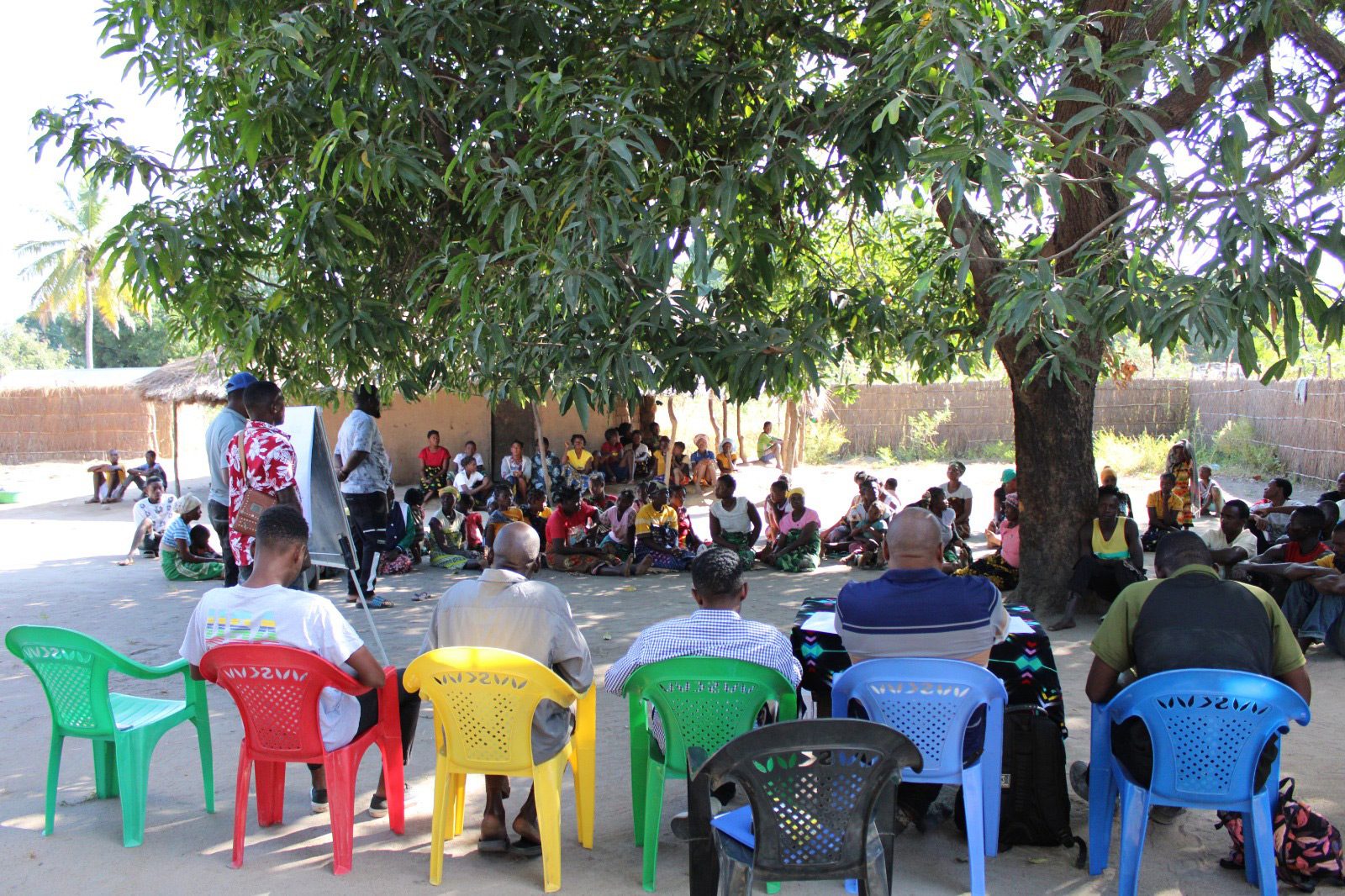
Dashboard results are presented back first to community leadership, then to the wider community at village-level meetings, using illustrated flipcharts and facilitated discussion.

The data is translated into a narrative that people recognise: households are going hungry; the community has income but most people don’t know how it is spent; leaders were chosen fairly but decisions are being made by a small group.

This is not simply reporting. It is a facilitated conversation that helps leadership recognise the structural problem and helps the community articulate what needs to change. Skilled facilitators use this moment to introduce participatory budgeting as a practical alternative, sometimes through role-playing exercises that let people experience what village-level decision-making could look like.

Participatory Budgeting

This is where transformation happens. In village-level assemblies, households participate directly in allocating community revenue:

seeing income and expenditure for the first time, collectively prioritising projects, and receiving a direct share of wildlife income as cash. Over time, communities develop their own constitutions, bills of rights, and financial procedures that entrench inclusive governance.

The shift also redefines the role of community leadership. Board members and managers move from controlling finances and projects themselves to overseeing financial and project management at the village level.

This transition requires new skills, new systems, and new habits of accountability, which is why it is closely linked to the tools and monitoring systems that follow.

The Ops Room

As governance devolves and the role of leadership shifts toward oversight, effective performance monitoring becomes essential.

The Ops Room is a cloud-based management and accountability system (built on ArcGIS Hub) that tracks community performance across four dimensions: Governance, Economics, Environment, and Social outcomes (GEES).

The concept draws on operations rooms found in conservancy headquarters, which typically use platforms like SMART or EarthRanger to monitor anti-poaching and animal movements. Our Ops Room expands the scope to encompass governance and livelihoods, and it is designed for community members, not just managers. Each community has its own account. The vision is that performance data will be accessible on phones, so that the transparency built through participatory budgeting is sustained through ongoing, visible monitoring.

The Ops Room is in its early stages. The platform has been developed and equipment installed in the first site (NG3 in Botswana). The next step is establishing the field monitoring programmes that will feed it with regular data. Related tools, including QuickBooks accounting and risk control frameworks, support the financial management systems that communities need as they take on greater responsibility.

Research & Learning

Every anchor site is also a research site. The people doing the research are, first and foremost, our anchor site partners:

conservancy managers, community specialists, NGO field staff, and government officials, many of whom are simultaneously enrolled in Master’s and PhD programmes through the University of Florida and Stellenbosch University. University students and faculty contribute additional capacity, but the driving force is African practitioners embedded in their own landscapes.

Anchor sites are designed as comparative studies, with treatment sites (where participatory governance is introduced) and counterfactual sites (where conventional systems continue), generating rigorous evidence on the impact of governance transformation.

The research feeds back into practice: refining tools, strengthening training materials, building the evidence base for policy, and informing the next iteration of the cycle.

Luwire, Niassa, Mozambique

In Practice

In 2024, Luwire became the first site where LtW implemented direct household revenue distribution. The existing committee-based institution was weak and corrupt, and the legally mandated share of hunting revenue reaching the community through it was minimal. LtW worked with the commercial operator, who committed funds directly for distribution to 16 sub-communities, with over 1,100 households each receiving a direct cash payment. The process demonstrated the transformative power of putting money and decisions directly in the hands of communities. Activity was suspended due to a security situation in the region, but LtW is returning to resume revenue distribution and develop the site’s Ops Room.

luwire-in-practice